🕌 Mission C · Faith and Diversity
How can the same thing that unites people also divide them?
📖 Background briefing
A country of many faiths: India's constitution declares it a secular state, meaning the government has no official religion and protects everyone's freedom to practise their own. Hinduism is the majority religion, but India is also home to one of the largest Muslim populations in the world, tens of millions of Sikhs, Christians, Buddhists (the religion was actually founded in India, by the Buddha), Jains, and smaller communities too. In many towns, temples, mosques, gurdwaras and churches stand within walking distance of each other.
Festivals that cross communities: Diwali (the Hindu festival of lights) and Holi (the festival of colours) are celebrated across India, often by people of other faiths too. Eid marks the end of Ramadan for Muslims. Gurpurab celebrates the birth of Guru Nanak, the founder of Sikhism, whose holiest site is the Golden Temple in Amritsar. Many of these are public holidays — a shared calendar for a religiously mixed country.
A difficult history: In 1947, when India gained independence from British rule, the territory was split into two countries — India and Pakistan — largely along religious lines, in an event called Partition. Around 15 million people had to leave their homes almost overnight, and the violence that followed killed hundreds of thousands of people. It remains one of the largest forced migrations in human history, and its consequences are still felt today.
Today: Most of the time, India's religious communities live side by side peacefully — but tensions do still occasionally flare up, especially around politics, land, or historical grievances. Understanding both the everyday coexistence and the real conflicts is part of understanding modern India.
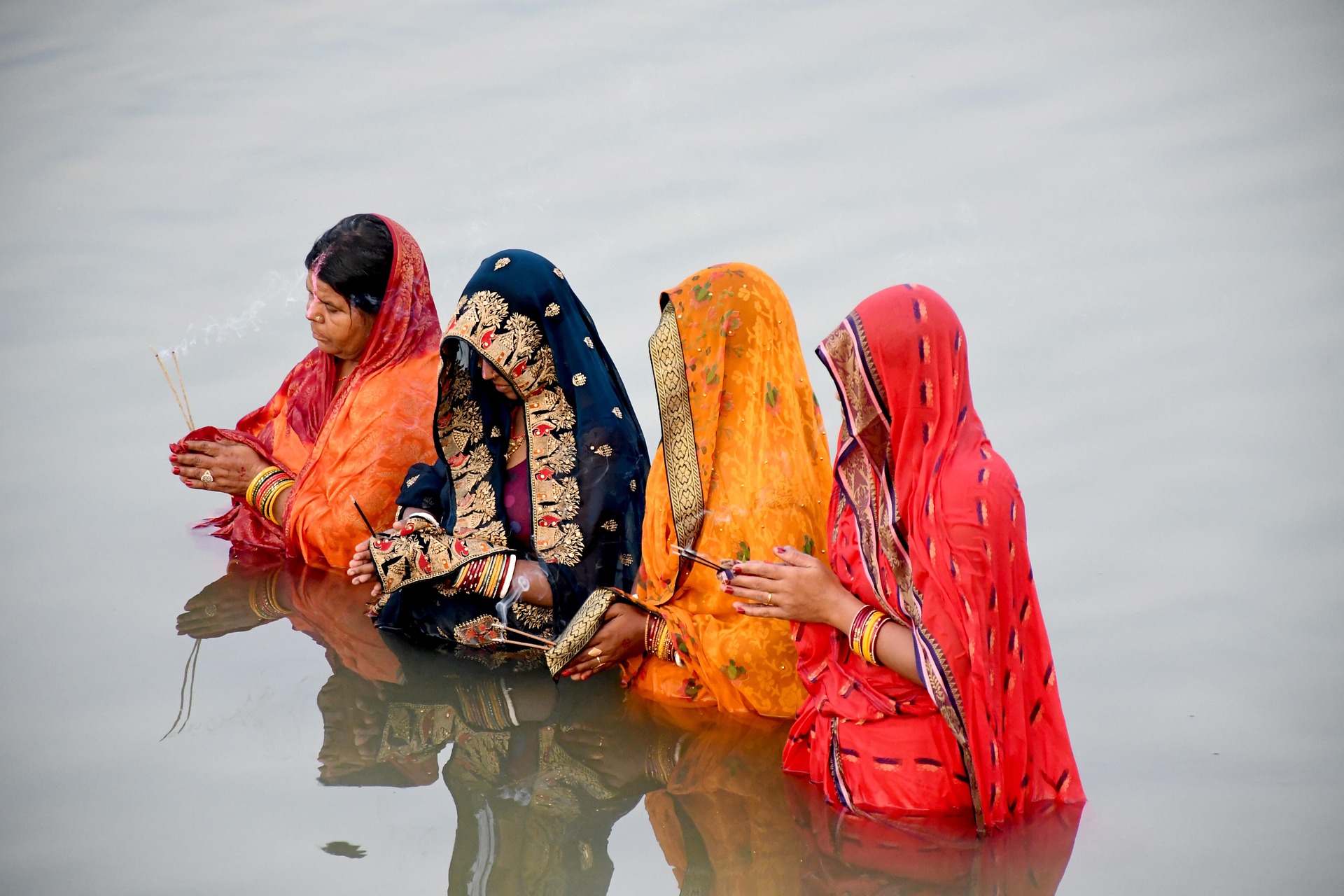 Chhath Puja
A Hindu festival honouring the sun god — worshippers wade into a river at sunrise and sunset to offer prayers.
Chhath Puja
A Hindu festival honouring the sun god — worshippers wade into a river at sunrise and sunset to offer prayers.
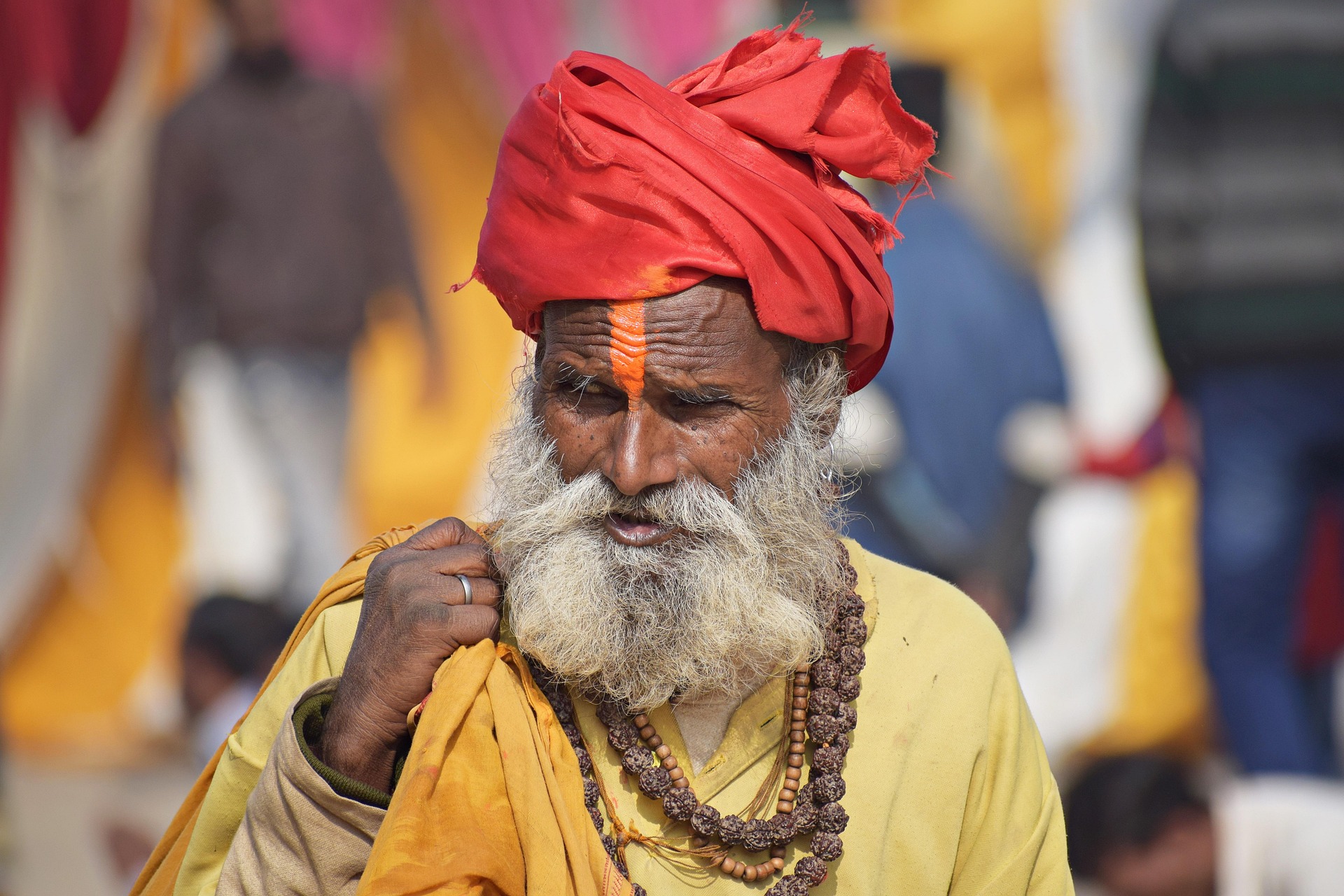 A sadhu
Sadhus are Hindu holy men who give up ordinary life to focus entirely on spiritual practice — a visible part of religious life at festivals and pilgrimage sites.
A sadhu
Sadhus are Hindu holy men who give up ordinary life to focus entirely on spiritual practice — a visible part of religious life at festivals and pilgrimage sites.
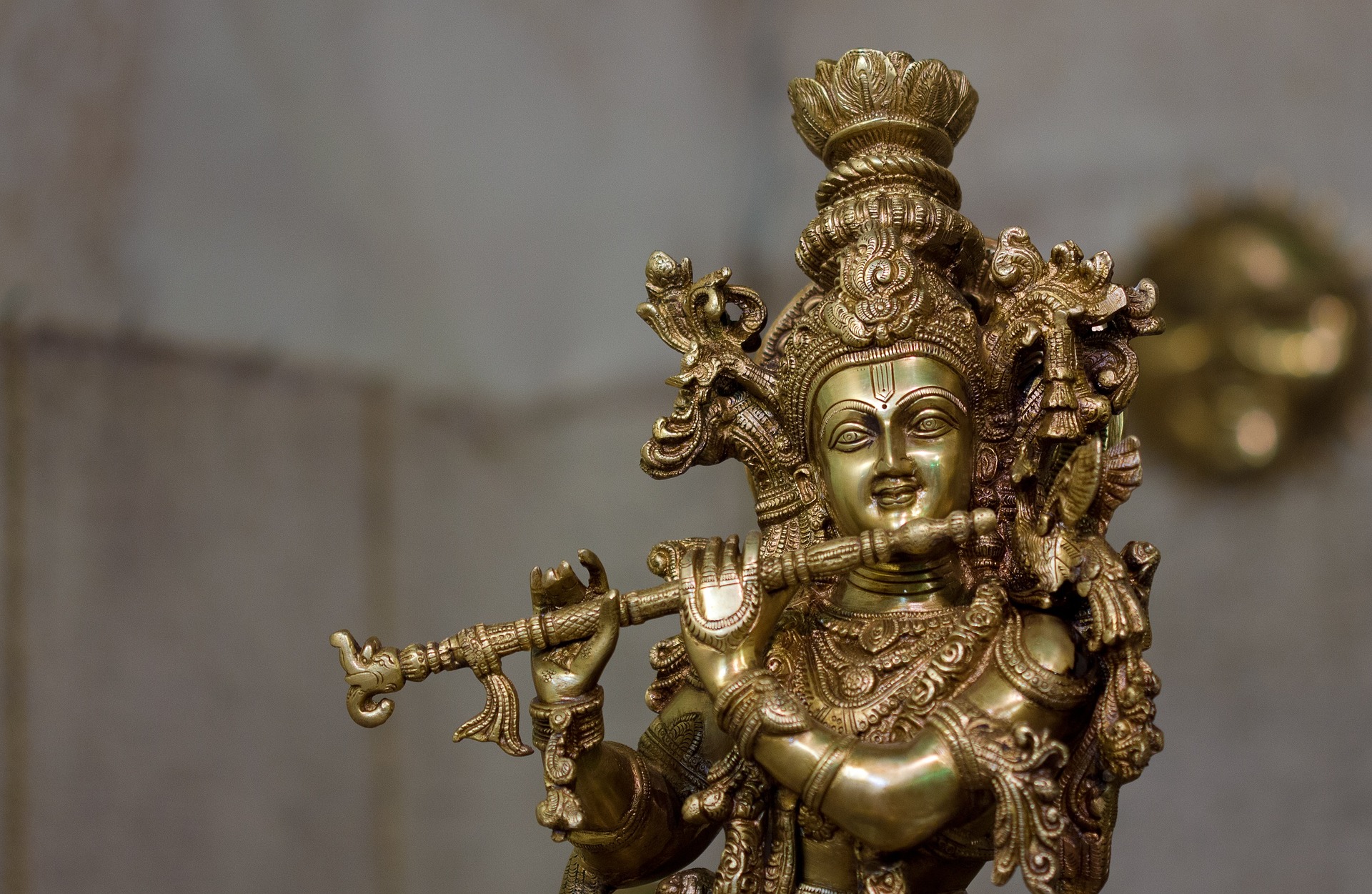 A temple statue of Krishna
Intricate metalwork like this is used across Hindu temples and homes to depict deities such as Krishna.
A temple statue of Krishna
Intricate metalwork like this is used across Hindu temples and homes to depict deities such as Krishna.
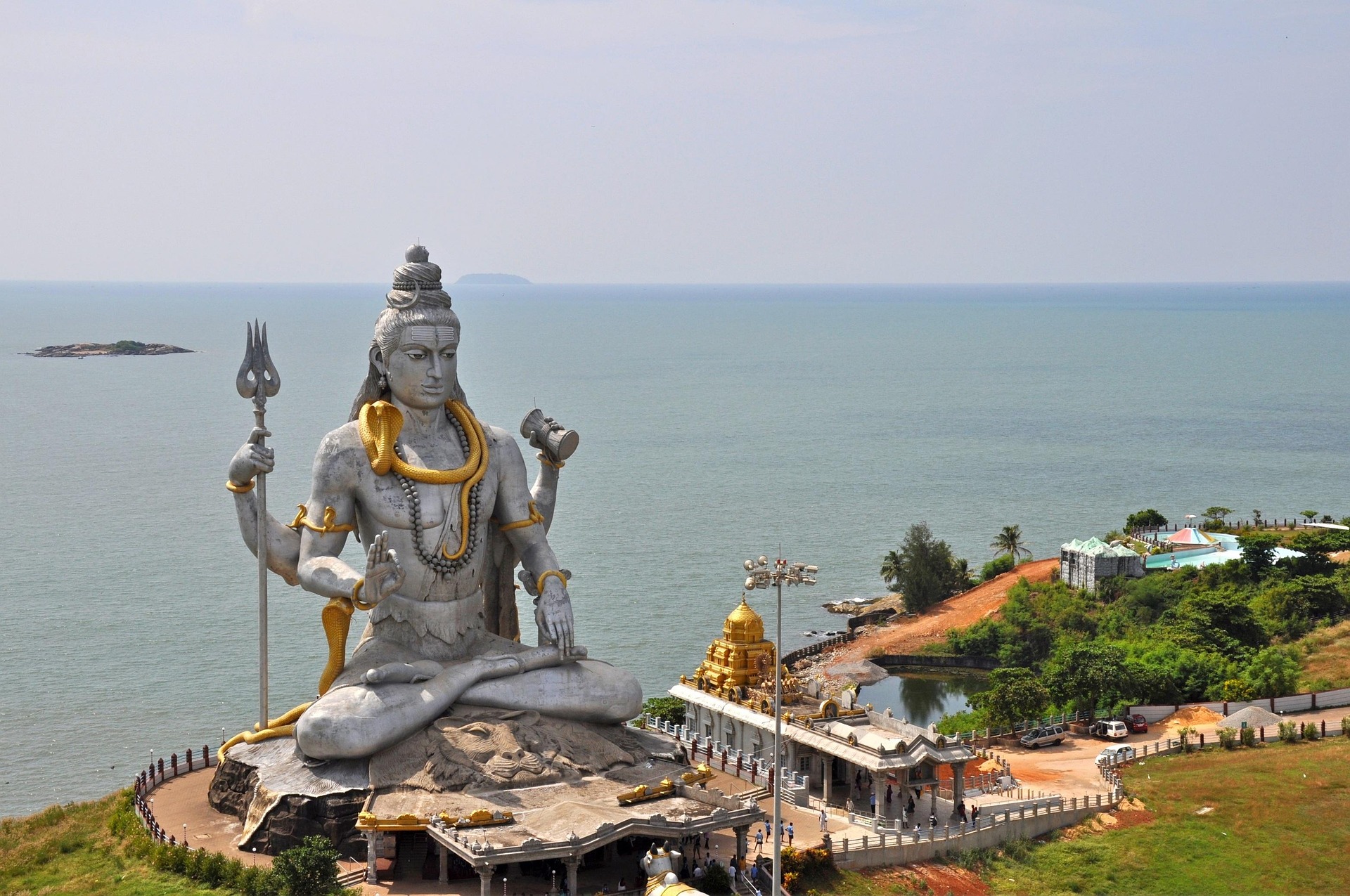 A 37-metre Shiva statue
One of the tallest Shiva statues in the world stands on the coast at Murudeshwar, Karnataka — a major pilgrimage site.
A 37-metre Shiva statue
One of the tallest Shiva statues in the world stands on the coast at Murudeshwar, Karnataka — a major pilgrimage site.
Name three different religions practised in India, and one festival that crosses religious lines.
What was Partition, and why is it important for understanding India and Pakistan today?
Why might it be both true that India's communities live together peacefully and that tensions sometimes exist?
🎬 Build your product: video explainer script
Your team is writing the script for a 1–2 minute video explainer, titled "How Can Diversity Unite and Divide a Country?" A video-explainer script is different from a normal text: for every moment, you write two things side by side — what the narrator says out loud, and what the viewer sees on screen at that exact moment. Write one NARRATOR line and one ON SCREEN line for each point below, like this:
NARRATOR: "India is home to …"
ON SCREEN: A map of India with icons for different religions popping up across the country.
Your script must cover three points, each with its own NARRATOR line and ON SCREEN line:
- A fact from above. Pick one thing you learned in the briefing. Finish this sentence yourself: "India is home to …"
- An example of diversity uniting people. Finish this sentence yourself: "One example of communities coming together is …"
- An example of diversity creating conflict, handled carefully and factually. Finish this sentence yourself: "But diversity hasn't always meant harmony — for example, …"
Point 1 — a fact from the briefing
Point 2 — diversity uniting people
Point 3 — diversity creating conflict
Submit your mission
Enter your name and class, then submit. Bring your script to Phase 4 for the class exhibition.
Nicely done
Your script is saved. Head to the Global Challenge Lab once all teams have finished Phase 2.