⚖️ Mission B · Living Between Rich and Poor
Same city, same country — completely different lives.
📖 Background briefing
Extreme contrasts: India is home to some of Asia's richest people — for example, the Ambani and Adani families — whose personal wealth is counted in tens of billions of dollars. At the same time, a significant share of the population lives below the poverty line, and inequality between India's richest and poorest has been growing.
Dharavi: One of Asia's largest informal settlements sits in the middle of Mumbai, one of India's most expensive cities. Around a million people live in Dharavi, in an area of roughly 2.1 square kilometres — and it's also a real economic engine, home to thousands of small workshops (recycling, leather, textiles, pottery) that together generate significant income every year.
Education — free on paper, unequal in practice: A 2009 law guarantees free and compulsory education for children aged 6–14. Government schools are free, but often under-resourced, with large class sizes. Private schools cost money but often have better facilities — so a family's income can shape a child's entire education. India also has a "reservation" (positive discrimination) system that sets aside places in universities and government jobs for students from disadvantaged castes and groups, to help balance out generations of inequality — a policy that is itself debated.
A fast-growing middle class: Since economic reforms in 1991 opened up India's economy, a large urban middle class has emerged — with access to smartphones, private healthcare, and international travel. This group didn't exist at this scale a generation ago, and it keeps growing.
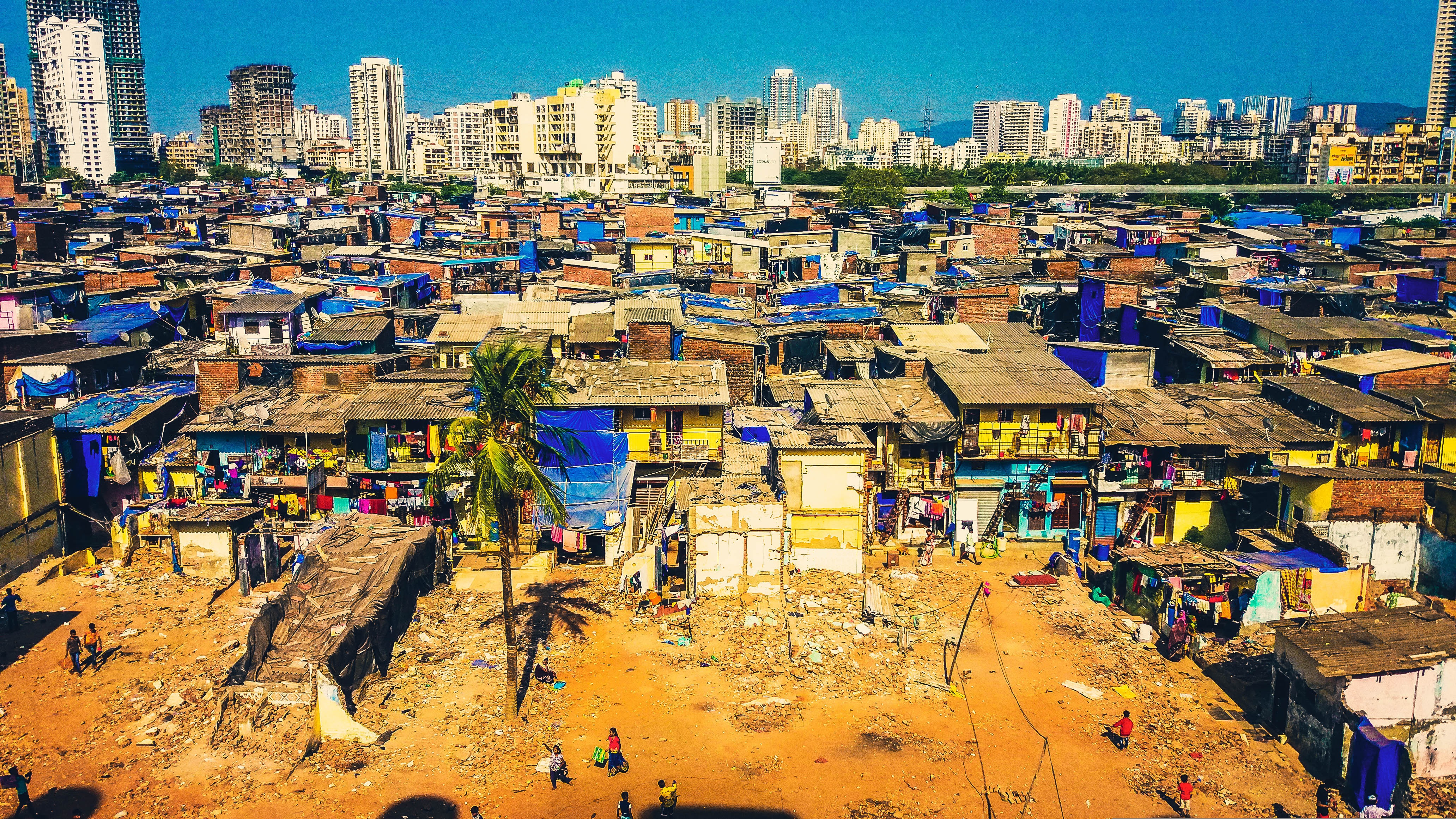 Skyscraper next to settlement
In cities like Mumbai, luxury apartment towers and informal settlements sometimes stand only streets apart.
Skyscraper next to settlement
In cities like Mumbai, luxury apartment towers and informal settlements sometimes stand only streets apart.
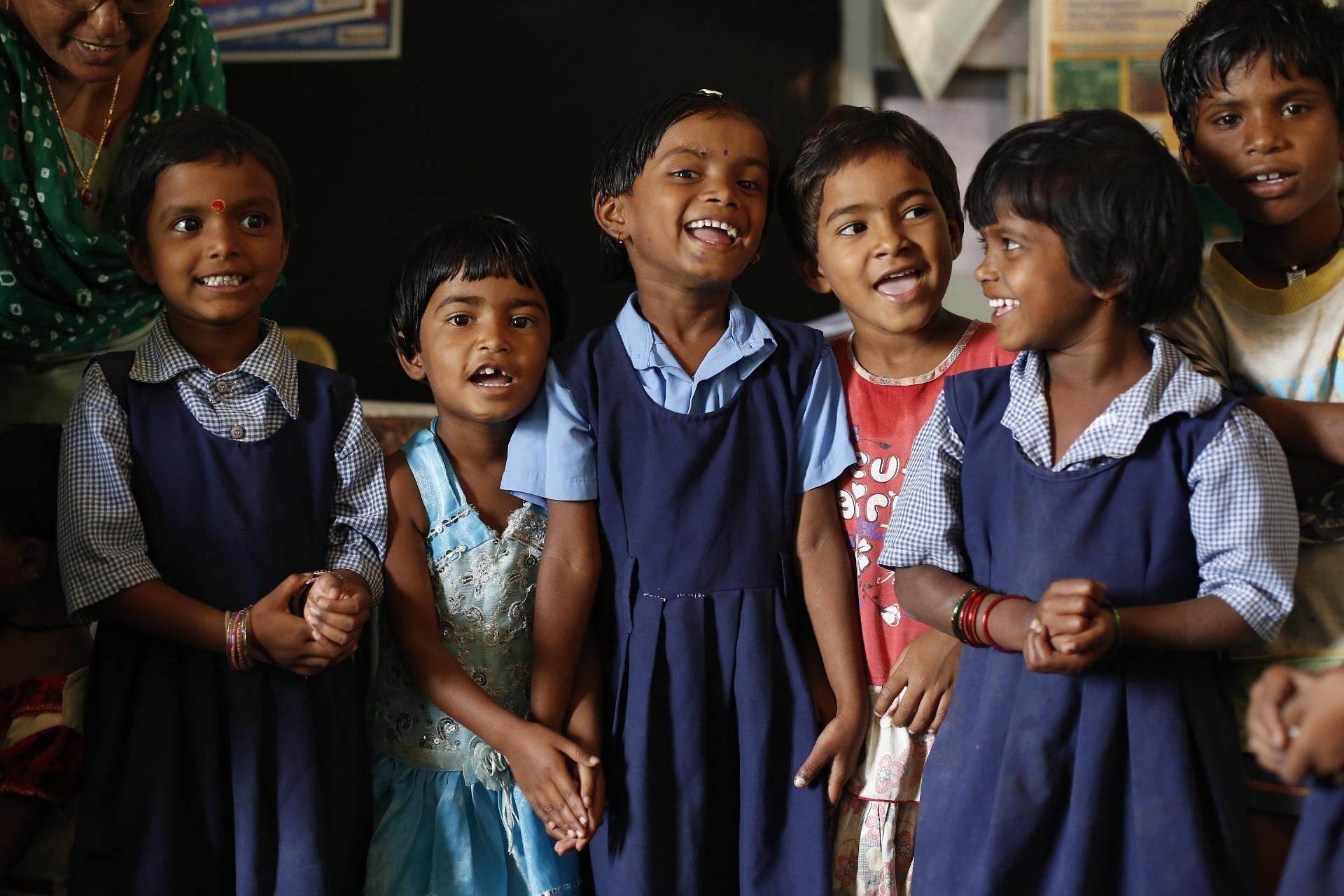 A government-school classroom
Free, government-run schools like this one educate the vast majority of Indian children — but often with far fewer resources than private schools.
A government-school classroom
Free, government-run schools like this one educate the vast majority of Indian children — but often with far fewer resources than private schools.
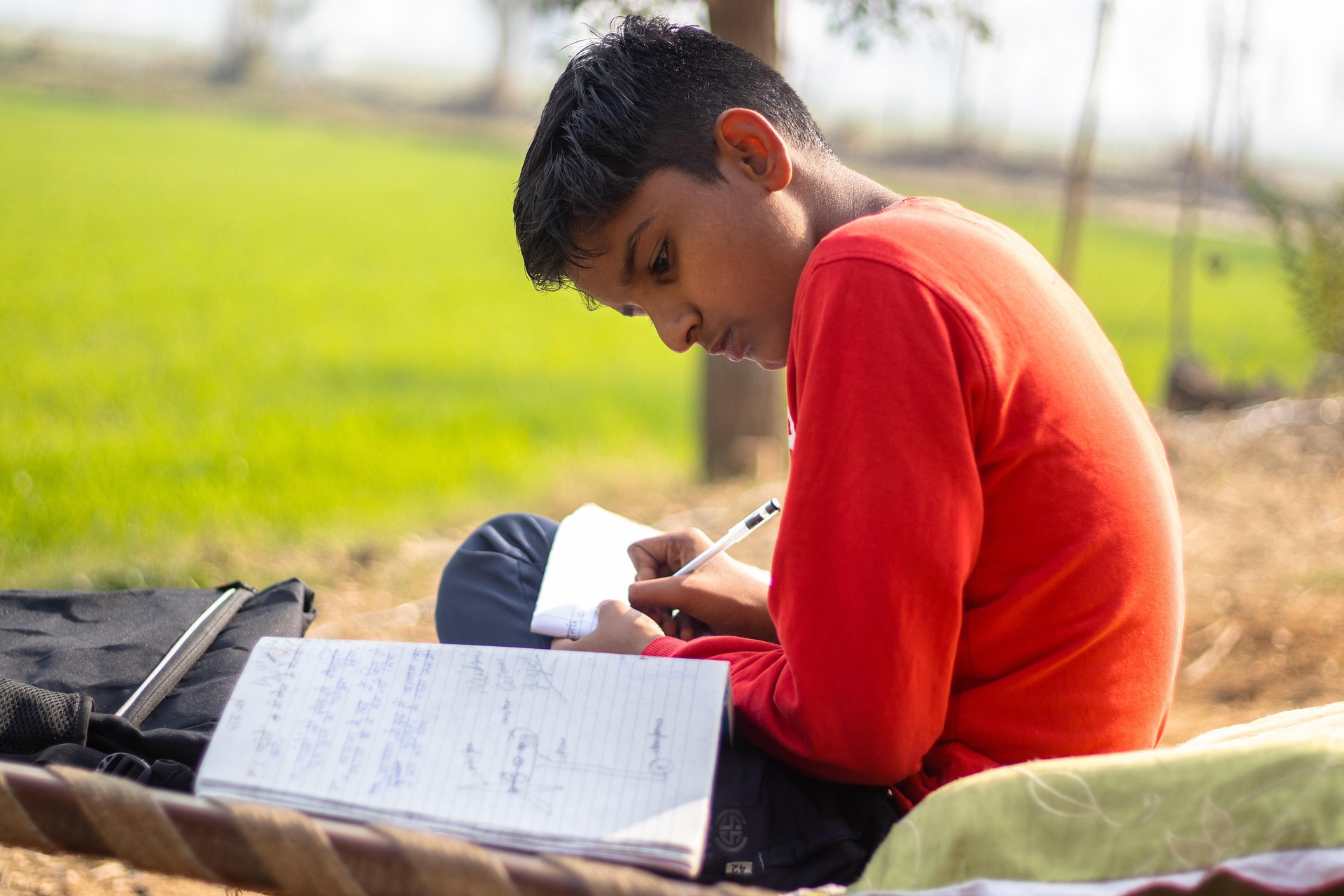 Studying without a desk
Not every child has a classroom, a desk, or even electricity at home to study by. Some do their homework wherever there's daylight.
Studying without a desk
Not every child has a classroom, a desk, or even electricity at home to study by. Some do their homework wherever there's daylight.
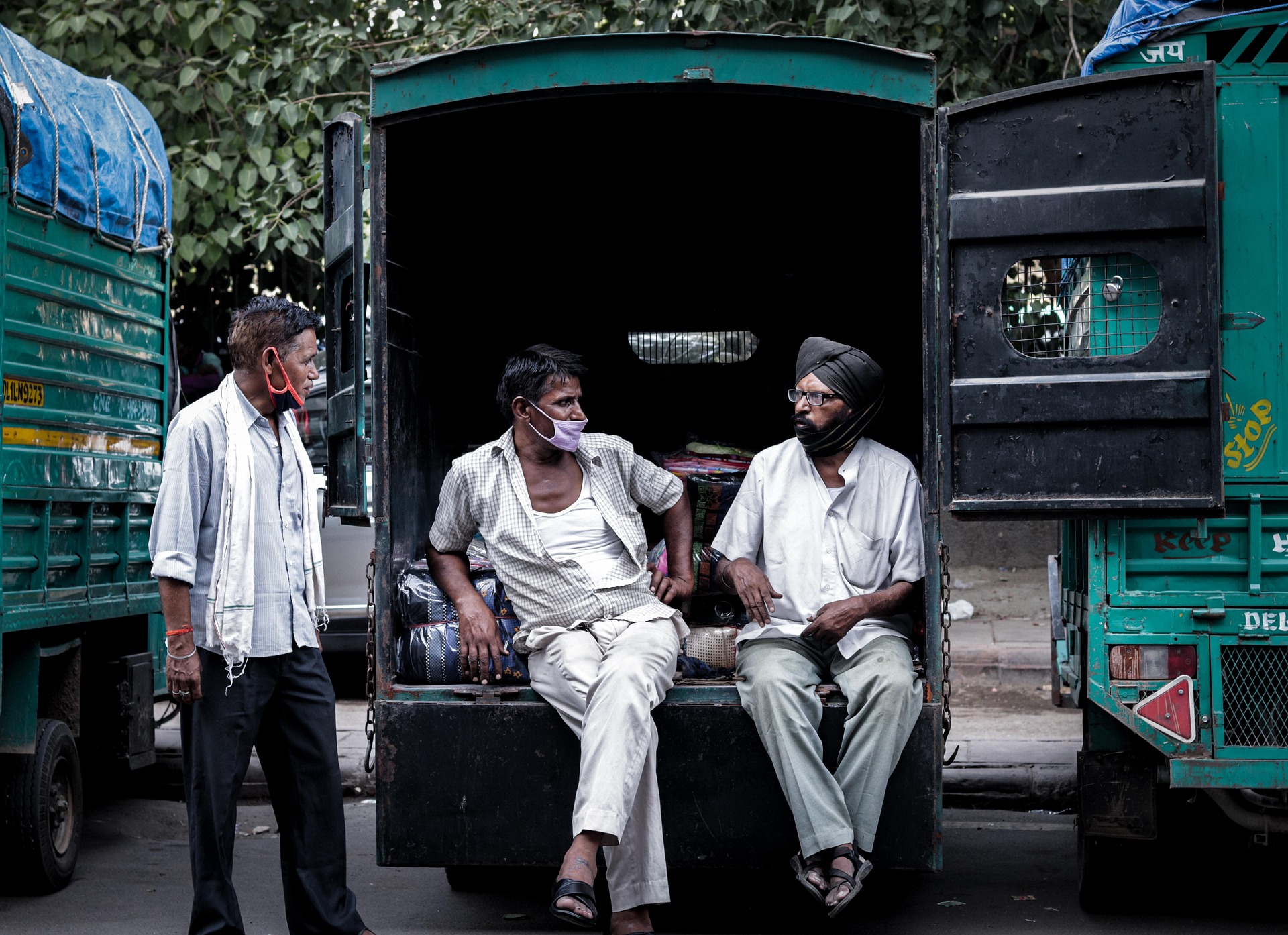 Daily-wage work
Millions of Indians earn a living through informal, day-to-day labour — with no fixed salary, contract, or guaranteed income.
Daily-wage work
Millions of Indians earn a living through informal, day-to-day labour — with no fixed salary, contract, or guaranteed income.
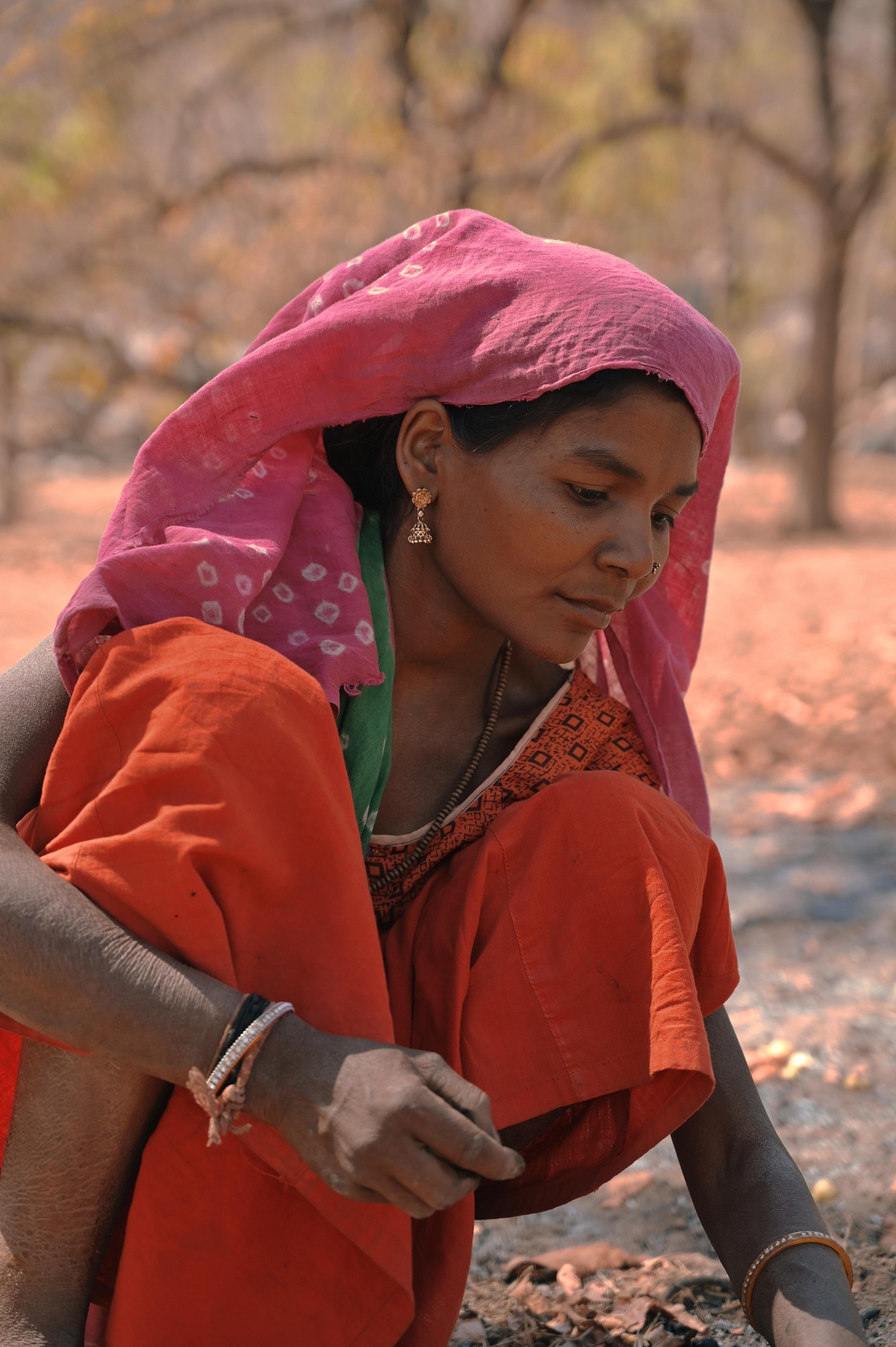 Rural India
Around 65% of India's population still lives in rural areas — a very different economic reality from the cities you usually see in the news.
Rural India
Around 65% of India's population still lives in rural areas — a very different economic reality from the cities you usually see in the news.
What is Dharavi, and why is it more than just a "poor area"?
Why might a family's income still decide the quality of a child's education, even though school is legally free?
What is India's "reservation" (positive discrimination) system trying to fix?
📸 Build your product: photo story
Your team is creating an interactive photo story for the exhibition, titled "Two Teenagers — Two Indias." Invent two 15-year-olds: one growing up in a low-income family, one in a wealthy family. Write the captions for 4 imagined photos per teenager (8 captions total) showing a normal day: morning, school, free time, evening. Each caption should be 1–2 sentences, written as if it were printed under a real photo.
Example caption to get you started: "6:30 am — Priya walks twenty minutes to the water pump before school. Her family's flat doesn't have running water."
Teenager 1 (low-income family) — 4 photo captions:
Teenager 2 (wealthy family) — 4 photo captions:
If your team wants to actually build the photo story (real or drawn images, printed or digital), write down your plan here: who takes/finds/draws which photo, and how you'll lay it out. You can't submit the finished photo story here — bring it to Phase 4 to show your teacher.
Submit your mission
Enter your name and class, then submit. Bring your finished photo story to Phase 4 for the class exhibition.
Nicely done
Your photo story captions are saved. Head to the Global Challenge Lab once all teams have finished Phase 2.