🏜️ Mission B · Life in Extreme Environments
Most of Australia isn't a beach. It's one of the driest inhabited continents on Earth.
📖 Background briefing
The Outback: Around 70% of Australia is classified as arid or semi-arid — desert or near-desert. Most of the population lives in coastal cities; the interior is vast and sparsely populated. Some cattle stations in the Outback are larger than small European countries.
Climate zones: Australia is huge and climatically split. The tropical north has a wet and a dry season; the centre is arid desert; the south-east and south-west have temperate climates similar to parts of Europe. A single country, several completely different climates.
Bushfires: Bushfires are a normal part of the Australian ecosystem — some native plants even need fire to release their seeds. But the 2019–2020 "Black Summer" was extreme: fires burned roughly 18 million hectares (about the size of the United Kingdom), killed dozens of people, and affected an estimated 3 billion animals. Aboriginal communities have practised "cultural burning" — small, controlled, seasonal fires — for tens of thousands of years to manage the land and reduce the risk of large uncontrolled fires.
Water: Australia is the driest inhabited continent. Many regions face long droughts, and water restrictions in cities are common. Managing water is one of the country's biggest ongoing challenges.
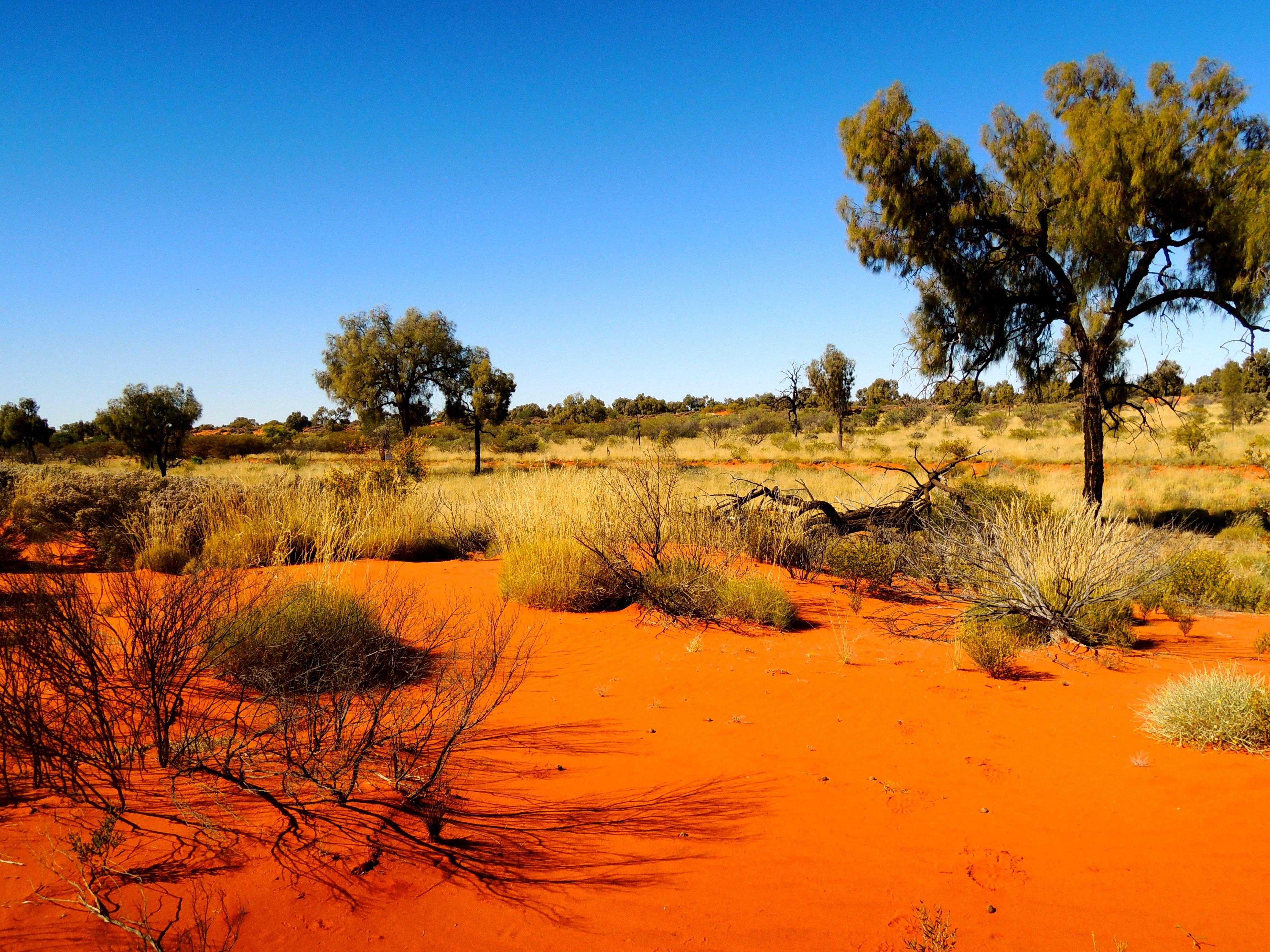 The real Outback
No beach in sight — red sand, spinifex grass, and huge distances between towns.
The real Outback
No beach in sight — red sand, spinifex grass, and huge distances between towns.
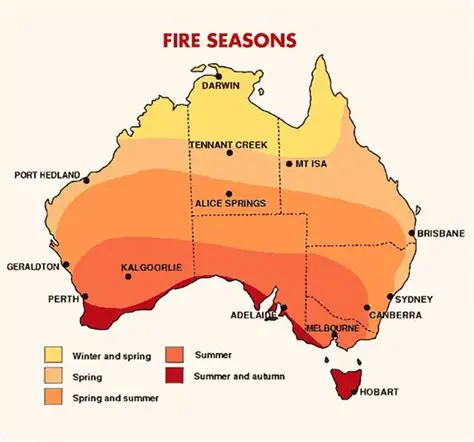 Fire seasons by region
Fire risk peaks at a different time of year depending on where you are — another sign of how many climates fit inside one country.
Fire seasons by region
Fire risk peaks at a different time of year depending on where you are — another sign of how many climates fit inside one country.
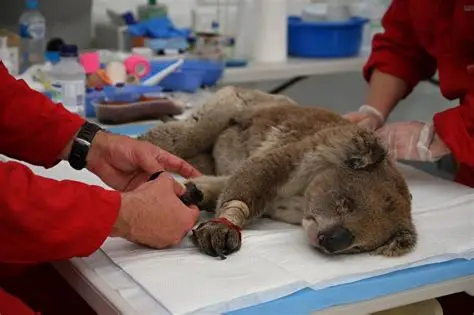 The cost for wildlife
Vets treating a koala injured in a bushfire. Estimates put Black Summer's animal toll at around 3 billion.
The cost for wildlife
Vets treating a koala injured in a bushfire. Estimates put Black Summer's animal toll at around 3 billion.
Why can one country have such different climate zones at the same time?
What made the 2019–2020 "Black Summer" different from a normal bushfire season?
What is "cultural burning," and why might it reduce the risk of large fires?
🧭 Build your product: survival guide
Before you start writing, decide on your format — a survival guide isn't just words.
How will your guide actually look? A printed pamphlet someone folds up and takes with them? A poster with drawings? A slideshow on a phone? Would you add photos, icons, or a hand-drawn map? Describe your plan in 2–3 sentences.
Now create the guide itself, in the format you planned above. Cover all four sections:
- What to pack and why (think about heat, sun, distance, and water)
- How to handle heat and fire risk — what should a visitor actually do?
- How to find or manage water in a place where it's scarce
- What visitors can learn from Indigenous land management. This means the knowledge Aboriginal communities have built up over tens of thousands of years of living safely with this land — for example cultural burning (small, controlled fires lit at the right time of year to clear dry undergrowth before it can fuel a huge bushfire) and reading the land (noticing which plants, animal tracks, or bird sounds show that water or shelter is nearby).
If your guide is a poster, pamphlet, or drawing, you can't submit that here — you'll show it to your teacher in class instead.
Write down your ideas and tasks here — who does what?
Submit your mission
Enter your name and class, then submit. Bring your guide to Phase 4 for the class showcase.
Nicely done
Your survival guide is saved. Head to the Critical Thinking Lab once all teams have finished Phase 2.